
Nonprofit Technology Projects That Changed Lives
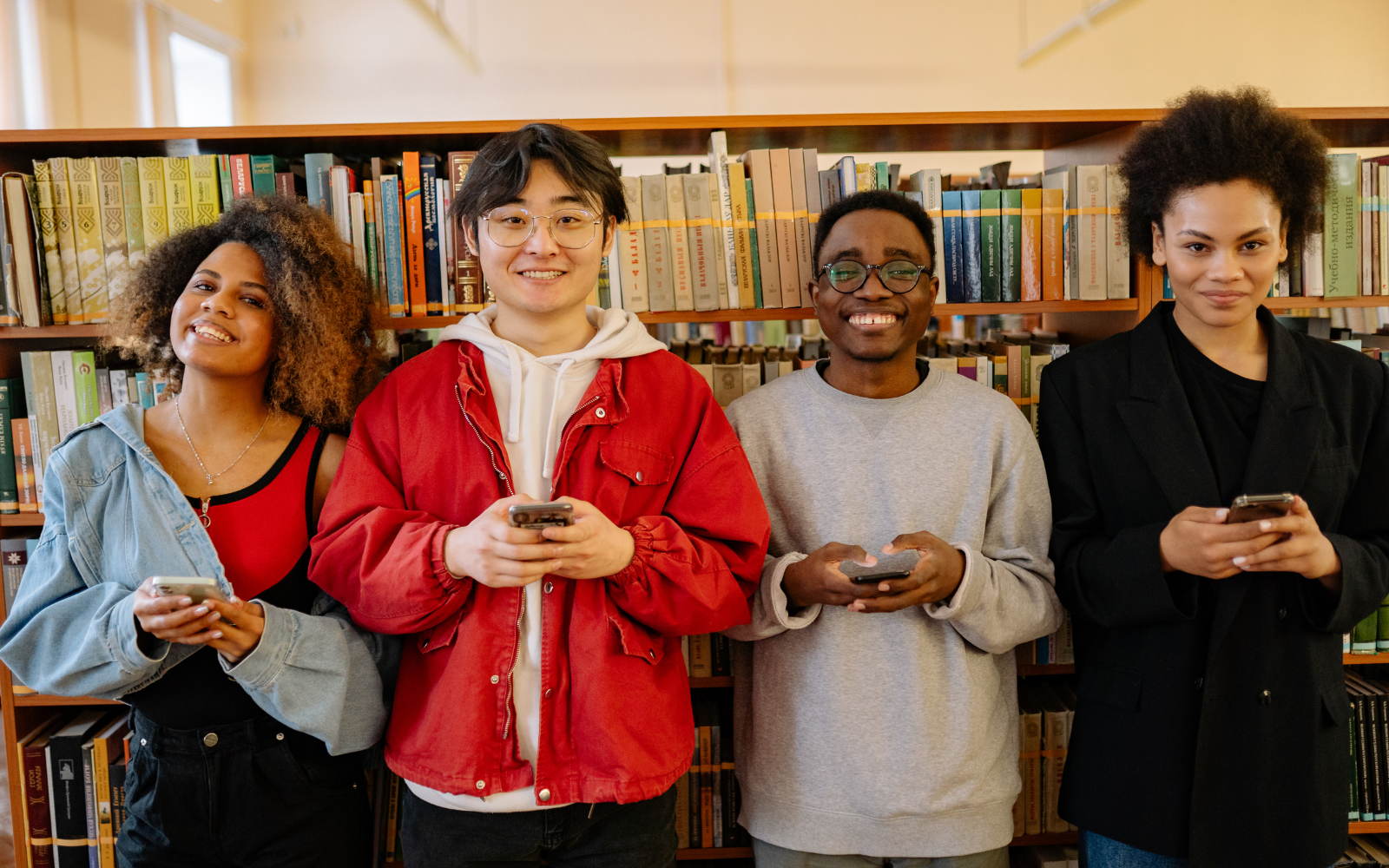
Four young people standing together in a community library.
Many technology projects are meaningful, but all are meaningful in different ways. Some projects change how organizations work, some, how people live.
One project that still stands out did not involve technology at all.
The Affordable Care Act was being implemented in Iowa, some communities were not showing up to the meetings because many did not know the meetings were happening. At that time, the companies responsible for outreach had the same explanation: We reached out, but they didn’t reach back. Our response was, “You showed up? That’s interesting. We didn’t see you at the grocery store, and I know that because I went there five times last week. We didn’t see you in the church. We didn’t see you at the nail shop.”
So, we developed a boots-on-the-ground strategy. We went to places where they were already gathering: nightclubs, barber shops, nail shops, and churches.
There, we were able to talk to them about insurance. What it meant, how it worked. And most important, how it would change their lives if they had it.
Maybe people weren’t hard to reach. They were looking in the wrong places.
That lesson has followed me into technology work. Technology is often not the hardest part. Understanding the circumstances around the technology is.
This became clearer during the pandemic.
Technology became vital to our survival. People were working from home. Children were going to school from home. None of it was ideal, but in the middle of a global pandemic, what it mattered most was to keep learning and working.
For me, that experience became personal through Project Nandi.
As a parent, I was watching my daughter’s online education and realized one thing: children’s brains develop very quickly and missing classes because of internet problems can negatively impact their learning.
That raised a bigger question: How many children were missing out on school because they did not have reliable internet access?
That question led to Project Nandi, created to help children stay connected to school.

Four young people gathered around a tablet, laughing together and learning.
At first, the solution seemed simple. Get the kids laptops, connect them to school, and everything would be fine.
That was naive on my part.
The home visits showed a much bigger picture.
One of the families was a mother sleeping on a couch with a three-month-old baby. That young mom needed far more than a laptop.
She needed help finding somewhere to stay, food, diapers, and baby formula. We needed a social worker to help her too.
The laptop was the entry to the resources she needed. She used it to apply for assistance, and get the help her family needed to survive.
That experience changed the way I approach the community through technology. Before deciding what technology someone may need, there has to be an understanding of what is actually happening in their life.
A similar lesson came from working with a refugee family from East Africa. Their younger children would sometimes freeze when a computer came out.
After some visits, the reason became clearer.
In the past, people had come to their houses to help them access resources. They asked detailed questions about traumatic experiences. The kids associated the computer with those experiences.
That would have been difficult to understand from a professional distance. It only became visible by becoming closer to the family and taking the time to understand what was happening.
The same thing happened while working with Twin Cities Broadband Cooperative.
Families were spending hours, days, and sometimes weeks dealing with internet companies over broken services, incorrect bills, and accounts that had been shut off.
They kept asking the same question, “Are there better options?”

A family smiling after receiving technology support.
I wanted there to be one.
Broadband matters to me for another reason, too.
I got into tech later in life, in my mid-age as a single mother. I had loved technology for years and worked in fields related to it like in Dell where I learned to assemble computers. But I had never really been given a straight path into tech. And once I got there, technology gave me something that I really needed: financial stability and flexibility that were difficult to find elsewhere.
That is why community technology has never been just about a device or an internet connection.
It is about what those things can make possible for people.